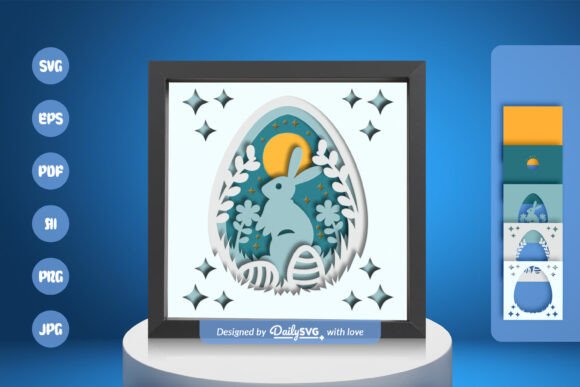
Easter Egg Bunny Layered Papercut Review
As a designer who regularly bridges the gap between digital assets and tangible textiles, I approach every new file with a specific question: will this actually translate to thread? When evaluating the Easter Egg Bunny Layered Papercut, my initial assessment focuses on its structural integrity for embroidery adaptation. While originally categorized under Shadow Boxes and formatted as a 3D SVG, this design possesses distinct characteristics that make it a compelling candidate for mixed-media projects. The layered aesthetic suggests depth, but in machine embroidery, depth must be engineered through stitch density and stabilizer management rather than physical paper spacing.
The visual personality of this design is undeniably whimsical yet structured. It carries a nostalgic Easter mood without feeling juvenile, making it suitable for both baby embroidery and sophisticated holiday decor. For an Etsy seller or small shop product creator, this balance is crucial. You are not just selling a bunny; you are selling a feeling of curated springtime charm. However, moving from a papercut concept to a finished product requires careful translation. The clean lines typical of vector-based 3D SVGs are excellent for digitizing, but they demand precision when converted into satin stitch or fill stitch regions to maintain that crisp, layered look on fabric.
Real-World Application: The Spring Tote Bag Test
To truly understand the commercial viability of the Easter Egg Bunny Layered Papercut, I mentally placed it onto a natural canvas tote bag intended for a boutique spring collection. Canvas is a forgiving fabric texture, but it has enough grain to challenge fine details. In this scenario, the design serves as the centerpiece of a personalized gift or retail item. The "layered" aspect of the original papercut file translates beautifully here as color blocking. Instead of physical layers, we use contrasting thread colors to create separation.
For this tote bag design, I would recommend utilizing a combination of running stitch outlines to define the "cuts" and light fill stitches for the interior sections. Heavy satin stitch borders could weigh down the canvas, causing puckering that ruins the professional finish. By treating the embroidery file as a map for color placement rather than just dense coverage, the final embroidered patch or direct stitch maintains the airy feel of the original papercut. This approach ensures the custom apparel or accessory remains functional and soft, which is a key selling point for handmade product customers who value quality over mere decoration.
Fabric Limitations and Technical Caution Zones
While the design is versatile, it is not universally applicable across all substrates. As an experienced reviewer, I must highlight where the Easter Egg Bunny Layered Papercut requires significant modification or should be avoided entirely. The intricate nature of layered designs often involves registration marks and precise alignment.
- Stretchy Fabrics: Applying this design to lightweight knits or performance wear is risky. The multiple color changes and potential density variations can cause tunneling. If you must use it on a sweatshirt embroidery project, ensure you are using a heavy cut-away stabilizer and potentially a topping to prevent stitches from sinking into the fleece.
- Curved Surfaces: Caps and hats present a unique challenge for layered aesthetics. The curvature distorts the flat perspective intended by the 3D SVG source. Unless you have advanced digitizing skills to warp the design for a curved hoop size, stick to flat surfaces like pillow covers, tea towels, or aprons.
- Dark Fabrics: Papercut styles rely on shadow and contrast. On dark fabric, the internal "shadow" layers may disappear unless you stitch a white underlay base first. This increases stitch count significantly. Always test on a scrap of the actual dark fabric before committing to a commercial embroidery run.
- Frequent Washing: For baby clothes or kitchen linens, verify the stitch density. Intricate layered details with tiny connecting points can snag or unravel in high-agitation wash cycles. Simplifying the outer edges for these items is a practical necessity for customer satisfaction.
Commercial Value and Brand Consistency
For creative entrepreneurs and digital product sellers, the value of this asset extends beyond a single stitch-out. The Easter Egg Bunny Layered Papercut offers strong brand consistency potential. Its distinct silhouette works exceptionally well in printable mockups, allowing you to market the design before production. When listing on platforms like Etsy, clear photography of the texture is vital. Buyers need to see how the "layers" interact with the fabric weave.
From a business perspective, this design supports higher price points because of its perceived complexity. It does not look like a generic stock graphic; it looks like an intentional piece of art. Whether used for holiday gifts, wedding favors, or boutique branding, the design communicates professionalism. However, trust is built on execution. A poorly registered layered design looks messy. Ensuring your machine tension is balanced and your hoop size is appropriate for the design’s dimensions is non-negotiable. Customers recognize the difference between a rushed job and a crafted item.
Designer Notes for Successful Execution
Before loading this embroidery file into your machine for a client project or inventory batch, adhere to these practical checkpoints. These steps separate hobbyist results from professional-grade merchandise.
- Verify Licensing and Specs: The store welcome message invites exploration, but it does not explicitly state commercial usage rights or technical specifications. Always confirm licensing terms before selling finished products or digital derivatives. Similarly, check the exact dimensions and stitch count in your software to ensure compatibility with your equipment.
- Stabilizer Selection: Do not guess. For the layered papercut effect, a firm tear-away or medium cut-away is usually best to support the registration of multiple layers. If the design includes delicate internal cuts, consider a water-soluble topping to keep stitches crisp.
- Thread Color Strategy: Test your palette on scrap fabric first. What looks good on screen may lack contrast on linen. Use black and white mockups to verify value contrast before selecting thread colors. The success of a layered design depends entirely on the viewer's ability to distinguish one section from another.
- Mockup Validation: Create a digital preview using the 3D SVG source alongside your physical sample. This helps in marketing the design assets effectively. Showing both the digital concept and the tactile reality builds buyer engagement and manages expectations regarding fabric texture interaction.
- Detail Inspection: Zoom in on the smallest elements of the design. Are there gaps smaller than 1mm? Will your needle penetrate cleanly without perforating the fabric like a stamp? Adjusting minimum stitch lengths during the digitizing or editing phase prevents structural failure in the finished product.
Ultimately, the Easter Egg Bunny Layered Papercut is a delightful asset that rewards preparation. It bridges the digital crafting world and traditional textile arts beautifully, provided the maker respects the physics of thread. By approaching this design with a critical eye toward fabric behavior and commercial presentation, you transform a simple seasonal graphic into a signature piece for your craft business. Whether you are creating a cherished baby keepsake or a line of spring tote bags, let practical judgment guide your needle, and the results will resonate with authenticity and quality.