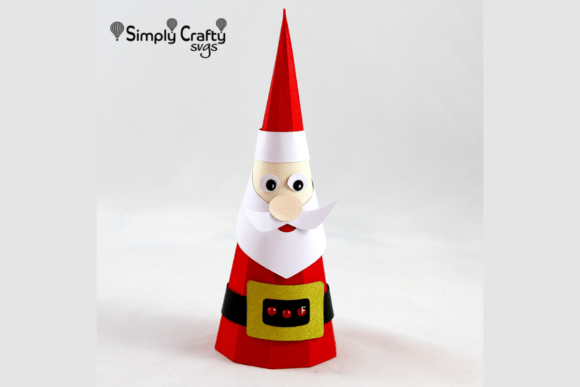
Cone Santa 3D SVG: A Christmas Asset for Publishers
As a digital publisher and blog designer, I constantly evaluate graphic design assets not just for their aesthetic appeal, but for their functional utility in a real content workflow. When reviewing the Cone Santa file, my immediate assessment focuses on its versatility as a seasonal visual anchor. This isn't merely a craft file; it is a structured editorial design element that bridges the gap between DIY crafting and professional lifestyle blogging. The whimsical nature of this paper Santa creates an immediate emotional connection, signaling to readers that the content is approachable, festive, and family-oriented.
In terms of editorial mood, Cone Santa strikes a balance between playful nostalgia and clean, modern presentation. It avoids the cluttered, chaotic look often associated with holiday clip art, making it suitable for high-end lifestyle niches, parenting blogs, and creative entrepreneur platforms. For publishers, this distinction is vital. We need assets that elevate our brand identity rather than detract from it. This asset feels curated and intentional, supporting content that aims to inspire creativity without sacrificing professional polish. It naturally supports niches focused on home decor, seasonal entertaining, kids' activities, and printable marketplaces.
Strategic Applications in Editorial Layouts and Web Design
When integrating Cone Santa into a publishing workflow, the primary goal is enhancing visual hierarchy and click-through potential. As a featured image or website header, the distinct conical shape provides excellent negative space for headline typography. Unlike complex illustrations where text gets lost, the geometric simplicity of this 3D form allows for clear, readable overlays. This is crucial for content marketing success, where the thumbnail must communicate the article’s value proposition instantly in crowded social feeds or search results.
Beyond standard blog headers, this asset excels in creating cohesive visual systems across multiple platforms. For Pinterest pin creation, the verticality of the cone mimics the platform's preferred aspect ratio, allowing designers to create long-form graphics that feel native to the feed. In email marketing, using Cone Santa as a recurring motif in newsletter banners helps build seasonal recognition among subscribers. It acts as a visual cue that signals new holiday content, driving higher open rates and engagement.
For those involved in affiliate marketing or selling digital products, this asset serves as an ideal mockup base. You can easily visualize how a digital download or printable design might look when assembled, adding tangible value to your sales pages. Whether you are promoting Cricut accessories, paper stocks, or your own Canva template bundles, showcasing the finished Cone Santa builds reader trust by demonstrating the end result clearly and attractively.
Enhancing Digital Products and Lead Magnets
The true power of this 3D SVG lies in its adaptability for monetization and audience growth. As a lead magnet, a "Cone Santa Assembly Guide" or "Holiday Decor Pattern Pack" offers immense perceived value. Because the design is vector-based, it scales perfectly for eBook covers, worksheet headers, and instructional PDFs without pixelation. This ensures your digital guide maintains a premium look regardless of whether it is viewed on a retina display or printed at home.
From a small business branding perspective, consistency is key. Using Cone Santa across your shop listings, social media stories, and blog posts creates a unified seasonal campaign. It transforms scattered holiday posts into a recognizable series. For educators or tutorial creators, the clean lines of the SVG make it perfect for step-by-step diagrams. You can isolate specific layers to show folding techniques or assembly order, turning a simple decoration into valuable educational content that keeps users on-page longer.
Furthermore, bringing festive cheer to your holiday decor with this adaptable file means you aren't limited to a single use case. While the description highlights it as a fun addition to mantelpieces and displays, digitally, it functions as a modular component. You can recolor it to match your site’s palette, resize it for different ad formats, or combine it with other elements to create unique social media graphics. This flexibility maximizes the ROI of the asset, allowing one purchase to fuel weeks of varied content production.
Placement Strategy: Where It Works and Where to Pause
Understanding where to deploy this asset is as important as the design itself. Cone Santa performs exceptionally well in hero sections, category thumbnails for "Christmas Crafts," and as accent graphics in sidebar widgets. Its bold silhouette reads clearly even at smaller sizes, making it effective for navigation icons or bullet points in listicles. However, publishers must exercise caution in certain contexts.
- Avoid Small Mobile Thumbnails: While the shape is distinct, intricate details may vanish on tiny screens. Always test visibility at 150px width.
- Text-Heavy Overlays: Do not place dense paragraphs directly over the central figure. Use the surrounding negative space for copy to maintain readability.
- Low-Contrast Backgrounds: If your site uses a white background, ensure the Santa has a stroke or shadow. White-on-white fails accessibility standards and looks unfinished.
- Corporate or Serious Niches: This asset is inherently whimsical. It may clash with financial advice, legal updates, or minimalist luxury branding unless styled very carefully.
- Busy Patterns: Avoid placing this detailed 3D render over plaid or complex textures. Solid colors or subtle gradients allow the creative design to breathe.
Publisher Notes: Technical Checks and Licensing
Before pushing any content live, experienced publishers run a rigorous quality assurance checklist. First, verify the commercial license. If you plan to use Cone Santa on monetized affiliate pages, in paid digital products, or within sponsored content, confirm that your license covers these specific commercial uses. Never assume personal-use files are safe for business applications; protecting your publication from legal risk is paramount.
Next, optimize for web performance. SVGs are generally lightweight, but complex 3D renders can sometimes contain unnecessary metadata or hidden layers. Clean the code using an optimizer before embedding it directly into your web design. If converting to PNG or JPG for broader compatibility, compress the file to under 100KB where possible to maintain fast load times. Speed is a ranking factor, and heavy holiday graphics shouldn't penalize your SEO.
Finally, conduct typographic pairing tests. Place Cone Santa beside your brand’s serif, sans-serif, script, and display fonts. Does the whimsy of the Santa clash with a rigid corporate sans-serif? Does it compete with an ornate script? Finding the right font pairing ensures the asset enhances your modern design aesthetic rather than fighting it. Test the graphic in grayscale as well; if the depth and form disappear without color, the design relies too heavily on hue rather than structure, which could cause issues for visually impaired readers or black-and-white printables.
By treating Cone Santa as a strategic publishing tool rather than just a seasonal decoration, you unlock its full potential. It becomes a vehicle for better engagement, stronger branding, and more professional editorial design. Whether you are building a creative marketplace presence or simply want your holiday blog tour to stand out, this asset offers the polish and flexibility that serious content creators require. Remember to always preview inside your actual blog layout before publishing, ensuring the final presentation meets the high standards your audience expects.