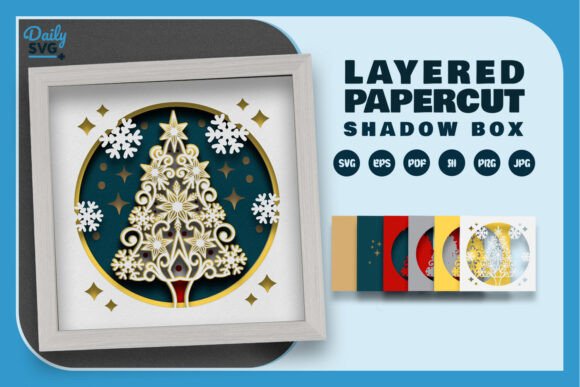
3D Christmas Snowflake Tree: A Designer’s Review
As an embroidery designer and product reviewer, I approach every new machine embroidery design with a healthy dose of skepticism. We have all downloaded files that look perfect on screen but turn into thread nests or distorted shapes once the needle hits the fabric. When evaluating the 3D Christmas Snowflake Tree, my primary focus is not just its festive aesthetic, but its structural integrity as a functional embroidery file. This design bridges the gap between traditional holiday motifs and modern dimensional art, making it a compelling candidate for makers who want their work to stand out in a saturated market.
First Impressions and Visual Architecture
The immediate appeal of the 3D Christmas Snowflake Tree lies in its clever use of negative space and layered geometry. Unlike standard flat holiday embroidery, this design utilizes depth to create visual interest without relying solely on excessive stitch count. The silhouette reads clearly as both a snowflake and a tree, which is crucial for instant recognition on finished goods. From a design perspective, the balance between open areas and dense sections suggests thoughtful digitizing. It avoids the common pitfall of being too heavy for lightweight fabrics while maintaining enough substance to hold its shape on structured items.
For Etsy sellers and boutique owners, this duality is valuable. It does not scream "generic clip art." Instead, it offers a sophisticated, architectural feel that appeals to customers looking for elevated personalized gifts rather than kitschy decor. The 3D SVG nature of the source implies clean lines and scalable vectors, which usually translates to smoother curves and sharper corners when converted to stitches, provided the digitizer respected the original geometry.
Real-World Application: The Sweatshirt Test
To truly judge this design, I mentally placed it in a real production scenario: creating a premium crewneck sweatshirt for a small shop capsule collection. Sweatshirts are high-stakes projects; the fleece backing is stable, but the knit face can distort if a design is too dense or poorly balanced.
In this context, the 3D Christmas Snowflake Tree performs exceptionally well because its dimensional aspects likely rely on strategic layering rather than overwhelming fill. If I were stitching this out, I would anticipate using a combination of satin stitch borders to define the edges and lighter fill stitch patterns for the interior. This variation in texture mimics the 3D effect visually without requiring foam or excessive underlay that could make the garment stiff. For a custom apparel project, this means the wearer gets a tactile, interesting design that remains soft and comfortable against the skin—a critical factor for customer retention and positive reviews.
Furthermore, this design serves as an excellent centerpiece for tote bag design or canvas aprons. The structural lines of the snowflake-tree hybrid provide natural anchor points for personalization. You could easily nestle a family name or year within the lower branches without disrupting the overall composition. This adaptability makes it a versatile asset for craft business owners who need one solid design that can be customized across multiple SKUs.
Navigating Fabric Limitations and Stabilizer Choices
While the design is versatile, professional judgment requires acknowledging where it might struggle. The intricate points typical of snowflake designs demand precision. On textured fabrics like terry cloth or boucle, those fine tips risk getting lost. If you are planning baby embroidery on plush blankets or bibs, you must verify the minimum detail size. If the points are thinner than your needle width plus clearance, they will fail. In such cases, simplifying the outer edge or adding a stronger border element is necessary.
Stabilizer selection is non-negotiable here. Because the 3D Christmas Snowflake Tree relies on geometric alignment, any shifting during hooping will ruin the illusion. For stretchy knits used in sweatshirt embroidery, a cut-away stabilizer is mandatory to prevent puckering around the perimeter. For woven items like pillow covers or tea towels, a tear-away may suffice, but only if the stitch density is moderate. Always test on a scrap of the exact fabric you intend to use. What works on quilter's cotton may tunnel on jersey knit.
I would also advise caution when placing this design on curved surfaces like caps. Unless the design has been specifically digitized for cap frames with proper pull compensation, the horizontal span of a tree/snowflake shape may distort vertically. Always check the aspect ratio and intended hoop orientation before committing to headwear production.
Commercial Viability and Brand Consistency
For those selling digital embroidery files or finished products, consistency builds trust. The 3D Christmas Snowflake Tree possesses a distinct visual personality that aligns well with modern farmhouse, Scandinavian, or minimalist winter aesthetics. It avoids the cluttered look of vintage styles, making it easier to photograph for printable mockups and social media. Clean lines photograph better, and better photos drive sales.
However, commercial success also depends on technical reliability. Before listing this as part of your design assets or selling it on a finished product, confirm the licensing terms. Ensure you have the right to sell physical items or digital derivatives. Additionally, consider how the design interacts with your brand palette. Does it require twelve specific thread colors to achieve the 3D effect, or can it be executed beautifully in monochrome? Designs that offer high impact with low color change counts are generally more profitable for commercial embroidery due to reduced production time and thread waste.
Essential Pre-Stitch Checklist for Makers
Before you load this embroidery project into your machine for a client order or shop stock, run through this practical evaluation list:
- Verify Hoop Compatibility: Confirm the design dimensions fit your available hoops with adequate margin for stabilization. Do not assume a 4x4 version exists if only larger sizes are listed.
- Audit Stitch Types: Open the file in your editing software or viewer. Check if the "3D" effect is achieved through foam (which requires specific cutting steps) or purely through stitch layering. This drastically changes your material prep.
- Contrast Testing: Stitch a sample on both white and dark navy fabric. Intricate internal details often disappear on dark backgrounds unless there is sufficient contrast stitching or underlay.
- Wash Test: If selling handmade products meant for frequent laundering (like baby clothes or kitchen linens), wash and dry your test swatch three times. Dimensional designs can sometimes warp or lift after repeated cycles if not anchored properly.
- Mockup Validation: Create a digital preview using the actual stitch file, not just the vector art. Customers need to see realistic texture expectations.
Final Thoughts on Design Integrity
The 3D Christmas Snowflake Tree represents a thoughtful intersection of seasonal tradition and technical embroidery design. It offers small shop product creators a chance to move beyond basic outlines and offer something with perceived value and artistic merit. Its success in your studio will depend entirely on respecting its technical requirements and matching it to appropriate substrates.
Remember that a beautiful screen image is merely a promise; the stitched result is the proof. By taking the time to understand the interplay of stitch density, fabric texture, and stabilizer choice, you transform a simple digital file into a professional-grade finished product. Whether you are crafting a bespoke holiday gift or scaling up for a seasonal launch, treat this design with the technical rigor it deserves, and it will likely become a reliable staple in your winter catalog.